
What Are Dental Veneers? Complete Guide to Transform Your Smile
Ever wondered how celebrities get those impossibly perfect smiles? The kind where every tooth is bright white and perfectly aligned? Chances are, they weren’t born that way. Many of those picture-perfect grins are crafted with dental veneers – thin covers that sit over your natural teeth to hide chips, stains, gaps, and other imperfections. If you’ve been considering veneers or just want to understand what they’re all about, here’s everything you need to know.
- What are dental veneers? Thin covers (like fake nails for your teeth) bonded to the front surface to fix cosmetic problems.
- How much do they cost? Porcelain veneers run $925-$2,500 per tooth, while composite versions cost $250-$1,500 per tooth.
- What types are available? Porcelain veneers last longer and resist stains better, while composite veneers are faster and cheaper but need replacing sooner.
- What are the pros and cons? They look natural and last for years, but you’re committing to permanent tooth changes and significant expense.
- Does insurance cover them? Rarely – most insurers consider veneers cosmetic unless there’s a medical reason for treatment.
- How long do they last? Porcelain veneers typically last 10-15 years, while composite ones last 5-7 years.
What Exactly Are Dental Veneers?
How would you describe veneers to someone who’s never heard of them?
Think of veneers like fake nails – but for your teeth. They’re thin covers that get permanently attached to the front of your teeth to change how they look. Most veneers are made from either porcelain (a type of ceramic) or composite resin (the same material dentists use for tooth-colored fillings).
Porcelain veneers are about as thick as a contact lens – roughly half a millimeter. That’s thin enough to look natural but sturdy enough to handle normal chewing and biting. The composite versions can be slightly thicker, but either way, they’re designed to blend in with your other teeth so nobody can tell you’ve had work done.
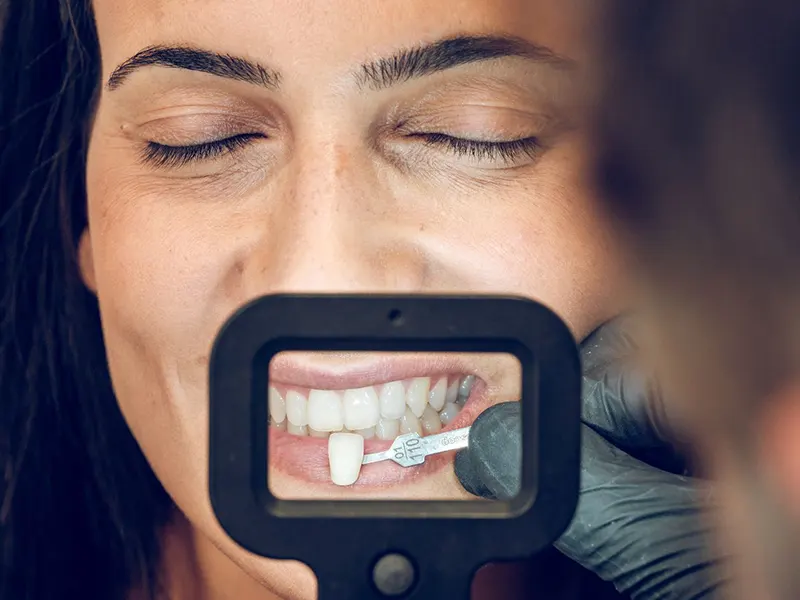
How do they actually work?
Here’s the deal: your dentist has to remove a thin layer of your natural tooth enamel first – usually about half a millimeter. This might sound scary, but it’s necessary so the veneer doesn’t stick out awkwardly or look bulky when it’s attached. Once your teeth are prepped, the dentist takes impressions and sends them to a lab where technicians create your custom veneers.
When the veneers are ready (usually takes a couple weeks), your dentist uses a special adhesive to bond them permanently to your teeth. The whole process typically takes two or three appointments, and at the end, you walk out with a completely different smile.
Why do dentists call veneers “permanent”?
Once that enamel’s removed, it’s gone for good. Your body can’t regrow it. This means your teeth will always need some kind of covering from that point forward – whether it’s replacement veneers down the line or some other restoration. There’s no going back to your original teeth.
That’s why dentists stress the word “permanent” so much. You’re making a one-way decision. If you’re having second thoughts or feel unsure, it’s completely fine to pump the brakes and think it over. This isn’t something you want to rush into.
What Problems Can Veneers Actually Fix?
Can they fix chipped or broken teeth?
Absolutely – that’s one of their main uses. If you’ve chipped a front tooth (maybe you bit into something hard, or took an elbow during basketball), a veneer can cover the damage and make the tooth look whole again. The veneer basically replaces the missing chunk while protecting what’s left underneath.
But here’s the catch: veneers only work for minor to moderate damage. If you’ve lost a huge piece of your tooth – like more than 30-40% of it – your dentist will probably recommend a crown instead. Crowns wrap around the entire tooth and provide more support for badly damaged teeth.
Will they cover up stained teeth?
Yes, and this is where veneers really shine. Some stains just won’t budge with regular whitening treatments. If you took tetracycline antibiotics as a kid, or if you had too much fluoride exposure growing up, you might have deep discoloration that’s baked into the tooth structure. Regular bleaching doesn’t touch that kind of staining.
Veneers work great for:
- Medication-related stains that whitening can’t fix
- Teeth that have yellowed or darkened with age
- Gray or brown discoloration from old injuries
- Uneven coloring that makes teeth look patchy
- Stubborn coffee, tea, or tobacco stains
Porcelain veneers are especially good for this because they reflect light the same way natural enamel does. The result looks surprisingly real – not fake or overly white like some people worry about.
What about crooked or oddly-shaped teeth?
Veneers can help with mild crookedness – like slightly rotated teeth, small gaps, or teeth that look too short or worn down. They create the illusion of straight teeth by changing their visible shape. But let’s be clear: they’re not actually moving your teeth. They’re just covering them up.
If you’ve got seriously crooked teeth or major alignment issues, orthodontics (braces or clear aligners) is still your better bet. That actually moves your teeth into the right positions instead of just masking the problem. Your dentist can help you figure out which approach makes more sense for your situation.
Porcelain vs. Composite: Which Type Should You Get?
What’s special about porcelain veneers?
Porcelain is basically the premium option. These veneers get made in a dental lab from high-quality ceramic that looks and acts a lot like natural tooth enamel. The lab process takes a week or two, and you’ll probably wear temporary veneers while you wait.
Here’s why people like them:
- They resist stains better than your natural teeth – coffee and red wine won’t mess them up
- They have a translucent quality that looks incredibly natural in different lighting
- They last 10-15 years or longer if you take care of them
- The material is gentle on your gums and doesn’t cause irritation
- The color stays stable – they won’t yellow over time
Yes, they cost more. But a lot of patients figure the extra money’s worth it for something that looks better and lasts longer. It’s like buying quality shoes that’ll last five years instead of cheap ones you’ll replace every six months.
What about composite resin veneers?
Composite veneers are the faster, cheaper option. Your dentist makes these right in the office using tooth-colored filling material. Instead of sending impressions to a lab, the dentist sculpts the composite directly onto your teeth, layer by layer, then hardens it with a special light.
The big advantage? You can walk in with problem teeth and walk out with veneers the same day. No waiting, no temporaries. Plus, they’re easier on your wallet – sometimes less than half the cost of porcelain.
The downside is they don’t last as long and they stain more easily. Composite is more porous than porcelain, so if you drink a lot of coffee or red wine, you’ll probably notice some discoloration over time. Most people need to replace composite veneers every 5-7 years.
So which one should you choose?
It really comes down to priorities. Want the most natural-looking, longest-lasting option and can afford it? Go with porcelain. Need something more budget-friendly or want results today? Composite makes sense.
Some people even do a mix – porcelain on the most visible front teeth and composite on the ones that don’t show as much when they smile. Your dentist can walk you through what makes sense based on your specific teeth, your budget, and what you’re hoping to achieve. There’s no single “right” answer that works for everyone.
The Good and Bad: What You’re Signing Up For
What are the real benefits of getting veneers?
The transformation can be pretty dramatic. You’re fixing multiple problems all at once – stains, chips, gaps, slight crookedness – without needing four different treatments. Most people get the results they want within a month, which is quick compared to something like braces that takes a year or two.
What patients like most:
- Results that look natural, not obviously fake
- You can customize everything – color, shape, size
- Porcelain veneers especially won’t pick up stains
- Less invasive than crowns (less tooth grinding)
- Fixes several cosmetic issues at the same time
- The confidence boost is real – people smile more
That last point isn’t trivial. A lot of people say veneers changed how they feel about themselves – they’re less self-conscious in photos, more confident in job interviews, more willing to smile at strangers. The psychological benefits go beyond just having nicer-looking teeth.
What are the downsides nobody warns you about?
First, there’s no trial run. Once your enamel’s removed, you’re committed. You can’t decide six months later that you want your old teeth back. Some people struggle with that level of permanence, especially if they’re generally indecisive about big decisions.
Other things to know:
- The cost is substantial and rarely covered by insurance
- You’ll probably have some temperature sensitivity, at least at first
- Veneers can chip or crack if you bite something hard
- They’ll need replacing eventually – nothing lasts forever
- If you have active cavities or gum disease, you’ll need to fix those first
Also, if you grind your teeth at night (a lot of people do without realizing it), you’ll need to wear a nightguard to protect your investment. Grinding can crack veneers just like it wears down natural teeth. Your dentist will probably bring this up during the consultation, but it’s worth keeping in mind.
Are they actually worth the money?
That’s different for everyone. If you’ve got cosmetic problems that genuinely bother you – like you avoid smiling in photos or you’re embarrassed to show your teeth – then veneers might be worth every penny. The impact on your confidence and quality of life can justify the expense.
They’re probably worth it if your cosmetic concerns genuinely affect your daily life, you’re committed to taking care of them properly, you understand exactly what to expect, and you’re financially comfortable with the investment. If money’s tight or you’re not really bothered by how your teeth look, maybe hold off. You can also start small – just do your front six teeth instead of a full set – to make the cost more manageable. Check out professional teeth cleaning options first if you’re just dealing with surface stains.
How Much Will This Cost You?
What’s the typical price range?
Brace yourself: veneers aren’t cheap. Porcelain ones typically run $925 to $2,500 per tooth, with most people paying somewhere around $1,500 to $2,000 per tooth. Composite veneers are easier on the wallet at $250 to $1,500 per tooth, averaging maybe $600 to $800.
Most people get veneers on their front six to eight upper teeth – those are the ones that show when you smile. So if you’re doing eight teeth with porcelain, you’re looking at somewhere between $12,000 and $20,000. Eight composite veneers might run you $4,800 to $12,000. These prices usually include everything: the consultation, prep work, temporaries, lab fees, and the final placement.
Why does the price vary so much?
Location matters a lot. A dentist in Manhattan or San Francisco is going to charge way more than someone practicing in a small town in the Midwest. That’s just how it works with cost of living and overhead expenses.
Other factors that affect the final bill:
- The dentist’s experience and reputation (specialists charge more)
- What brand or quality of materials they use
- How many teeth you’re treating
- How complicated your case is
- Lab fees for custom work
- Any prep work needed first (like cleanings or fillings)
- Whether they use digital scanning or old-school impression molds
Some offices offer package deals if you’re doing multiple teeth, which can bring the per-tooth cost down a bit. Always worth asking about.
What if you can’t afford the standard options?
There are cheaper alternatives, though they come with trade-offs. Composite bonding uses similar material to composite veneers but often needs even less tooth prep. Professional whitening might solve your problem if it’s just staining. Orthodontic treatment fixes actual alignment issues instead of covering them up.
Some dentists offer “minimal-prep” veneers that require almost no tooth shaving, though these don’t work for everyone. Dental schools sometimes do veneers at reduced rates – students do the work under supervision, so it takes longer but costs less. And yes, some people travel to other countries for cheaper dental work, though you need to research that carefully to make sure you’re not sacrificing quality or safety. Consider looking at dental bridge options too if you’re dealing with missing teeth alongside cosmetic concerns.
Will Insurance Pay for Any of This?
Why don’t insurance companies cover veneers?
Most dental insurance treats veneers as cosmetic – meaning they’re for looks, not health. Insurance typically covers things that prevent disease or restore function (like fillings, crowns for broken teeth, or gum disease treatment). But veneers? Those are usually considered elective. You want them, you don’t medically need them.
That’s the insurance company’s logic, anyway. They draw a line between procedures that keep your mouth healthy and procedures that make it look better. Veneers fall on the “look better” side, so you’re paying out of pocket.
Are there any situations where insurance might help?
Occasionally, yes – but it’s rare. If you need veneers because of an accident or injury that damaged your teeth, and you can prove they’re necessary for function (like eating or speaking properly), some insurance plans might cover part of it. You’ll need solid documentation from your dentist explaining why this is medically necessary, not just cosmetic.
Even when insurance does kick in, it’s usually just partial coverage – maybe 50% after you’ve met your deductible. And if you want any aesthetic upgrades beyond basic function restoration, you’re paying for those yourself. Don’t assume anything here. Call your insurance company before you commit to treatment and get details about your specific plan in writing.
How can you make the cost more manageable?
Most dental offices understand this is expensive and offer payment plans. Some do in-house financing where you pay monthly, sometimes interest-free if you pay it off within a certain timeframe. Third-party companies like CareCredit, LendingCompany, or Prosper Healthcare Lending specialize in medical and dental loans, often with promotional zero-interest periods.
If you have a Health Savings Account (HSA) or Flexible Spending Account (FSA), you can use pre-tax money for veneers, which effectively gives you a discount based on your tax bracket. Some people put it on a credit card with a 0% intro APR and pay it off before the promotional period ends. Talk to the dental office about financial options during your consultation – most are pretty flexible about working out payment arrangements.
Can Veneers Replace Missing Teeth?
What if you’re missing a tooth – can a veneer fill that gap?
No. This is a common misconception. Veneers need an actual tooth to stick to – they’re covers, not replacements. If you’ve got a gap where a tooth used to be, a veneer can’t bridge that space. It would have nothing to attach to and would just break immediately.
Trying to extend veneers over an empty space would look weird and wouldn’t work functionally. Plus, leaving gaps in your smile creates other problems over time – your other teeth shift to fill the space, you lose bone in your jaw, and your bite gets messed up. You need a real tooth replacement, not a cover-up.
What should you do about missing teeth?
You’ve got several good options. Dental implants are the gold standard – they replace both the root and the visible tooth, acting like a permanent natural tooth. They prevent bone loss and give you full chewing power.
A dental bridge uses the teeth on either side of the gap as anchors to hold a fake tooth in the middle. It’s fixed in place (not removable) and doesn’t require surgery. Partial dentures are removable appliances that can replace one or more missing teeth, especially if you’re missing teeth in different areas. Implant-supported bridges combine the stability of implants with the gap-filling ability of bridges.
Once you’ve replaced the missing teeth with one of these solutions, you can absolutely get veneers on your other teeth if you want to. Lots of people do both – implants for missing teeth and veneers for cosmetic improvements on the rest. The key is fixing the functional problem first, then addressing the aesthetic concerns.
Veneers vs. Implants: What’s the Actual Difference?
How are implants different from veneers?
They’re completely different things solving completely different problems. Implants replace missing teeth – the whole thing, from root to crown. A surgeon places a titanium post in your jawbone (that’s the artificial root), and a crown gets attached on top. Veneers are thin covers that go over existing teeth to improve how they look.
Think of it as follows: implants give you new teeth where you had none. Veneers give your existing teeth a makeover. Totally different purposes. Implants maintain your bone density and restore full chewing function. Veneers are purely cosmetic – they don’t affect the root or bone at all.
When would you need implants instead of veneers?
Go with implants if you’re actually missing teeth. If you need to prevent bone loss where teeth are gone. If you want to restore full bite strength and chewing ability. If you need a permanent solution that doesn’t depend on neighboring teeth.
Implants also make sense if you’ve got failing teeth that need to come out – the implant replaces the extracted tooth. Veneers can’t help with any of these situations because, again, they need existing tooth structure. Your dentist will look at your mouth and tell you straight up whether you need implants, veneers, or maybe both as part of a bigger treatment plan.
Can you get both implants and veneers?
Sure – it’s actually pretty common. Lots of people have both missing teeth and cosmetic concerns with their remaining teeth. You might need an implant to replace a molar you lost years ago while also getting veneers on your front teeth to fix staining or chips.
The implant crown can be made to match your veneers perfectly, so everything looks cohesive. This combination approach handles both function (replacing missing teeth) and aesthetics (improving the appearance of the teeth you have). You end up with a complete smile that looks natural and works properly.
What’s the Process Actually Like?
How many trips to the dentist does this take?
Plan on two or three visits spread over a few weeks. Your first appointment is the big one – consultation, examination, treatment planning, and tooth prep. The dentist looks at your teeth, you discuss what you want, they might take X-rays, and they create impressions or digital scans.
Then comes the prep work: your dentist removes about half a millimeter of enamel from the front of each tooth getting a veneer. This makes room so the veneers don’t stick out. You’ll usually get temporary veneers to wear while the lab makes your permanent ones – this protects your prepped teeth and keeps you from looking different for two weeks.
The second appointment, typically two weeks later, is when you get the real deal. The dentist removes the temps, tries on the permanent veneers to check fit and appearance, makes any tiny adjustments, and then bonds them permanently to your teeth. Some dentists have you come back a third time just to make sure your bite feels right and everything’s comfortable after you’ve had a few days to adjust.
Does getting veneers hurt?
Not really, no. Your dentist uses local anesthesia during the tooth prep, so you don’t feel anything while they’re removing enamel. The amount they take off is pretty small, and the procedure is less invasive than getting crowns or other major dental work.
After the numbing wears off, you might have some sensitivity to hot or cold stuff, especially while you’re wearing the temporary veneers. This usually goes away within a few days to a couple weeks after your permanent veneers are bonded. If you do have discomfort, regular over-the-counter pain relievers handle it fine. Most people say it’s really not bad at all.
How long until you feel normal again?
Recovery’s pretty quick. You can go right back to work or whatever you need to do after your appointment. Once the numbness wears off, you can eat and drink normally, though a lot of dentists suggest sticking with softer foods for a day or two while you get used to the feel.
Your mouth needs time to adjust to the slight changes – maybe your bite feels a tiny bit different, or the veneers feel a little strange against your tongue. This adjustment period usually lasts a few days to a week. If discomfort, sensitivity, or bite weirdness continues longer than a week, call your dentist – you might need minor adjustments. Most people feel totally comfortable with their veneers within a week or two.
Taking Care of Your Veneers
How long will your veneers actually last?
Depends mainly on what they’re made of and how well you take care of them. Porcelain veneers typically last 10-15 years, and plenty of patients get 20+ years out of them with good care. The ceramic material holds up really well against staining and normal wear.
Composite resin veneers don’t last as long – usually 5-7 years before they need replacement or serious repair. Composite’s more porous and softer than porcelain, so it’s more vulnerable to staining, chipping, and general wear. How long yours last also depends on your oral hygiene, what you eat and drink, whether you grind your teeth, whether you play contact sports, and whether you bite hard stuff like ice or pen caps.
What do you need to do every day to keep them looking good?
Good news: caring for veneers is basically the same as caring for regular teeth. Brush twice a day with non-abrasive toothpaste and a soft-bristled brush. Floss daily to get plaque and food particles out from between teeth and along the gum line. Pay extra attention where the veneer meets your natural tooth.
Important habits:
- Don’t bite hard stuff (ice, hard candy, pens, your fingernails)
- Wear a nightguard if you grind or clench your teeth
- Watch your intake of staining foods and drinks (especially with composite veneers)
- See your dentist every six months for checkups and cleanings
- Don’t use your teeth as tools for opening packages or bottles
- Wear a mouthguard if you play contact sports
Regular dental visits let your dentist check on your veneers, make sure the bonding’s still solid, and catch small problems before they become big ones. Professional cleanings keep both your veneers and natural teeth healthy.
What happens if a veneer gets damaged?
Small chips or rough spots can sometimes be fixed by polishing them smooth or adding a little composite material to fill the defect. But major damage usually means you need to replace the whole veneer. Unlike natural teeth, veneers can’t be patched extensively and still look good.
When a veneer needs replacing, your dentist carefully removes the old one, preps the tooth surface again if necessary, and makes a new veneer to match your other ones. Most dental offices keep records of your original veneers’ shade and specs so they can match them if you need a replacement. Replacing one veneer is generally easier than the initial placement of a full set.
Are You Actually a Good Candidate?
Who’s an ideal candidate for veneers?
Best candidates are people with generally healthy mouths who just have specific cosmetic complaints about their smile. You’re probably a good fit if your teeth and gums are healthy (no active decay or gum disease), you’ve got enough enamel for proper bonding, you understand what’s realistic and what’s not, you’re committed to taking care of them, and you’ve got specific aesthetic problems veneers can fix.
Veneers work especially well for adults whose facial growth and tooth development are finished. People who want to tackle multiple cosmetic issues at once often find veneers more efficient than doing several separate treatments. Good candidates also understand that this is permanent and they’re signing up for long-term maintenance.
Who should probably skip veneers?
Some situations make veneers a bad idea, or at least mean you need to handle other issues first. You might not be a good candidate if you’ve got active cavities or gum disease (fix these first), your teeth are severely weakened or damaged (you need crowns instead), you grind or clench your teeth and won’t wear a nightguard, or you don’t have enough enamel for bonding.
Young people whose teeth are still developing should wait until growth stops. If you’re expecting results that aren’t actually possible, you’ll be disappointed. If your teeth are seriously crooked or misaligned, orthodontics makes more sense because it fixes the actual problem instead of just covering it up. Your dentist will look at your specific situation and tell you honestly whether veneers are right for you or if there’s a better option.
Ready to Take the Next Step?
Deciding to get veneers is a big deal – both financially and in terms of committing to permanent changes to your teeth. Take your time researching cosmetic dentists in your area who have solid experience with veneers. Schedule consultations with a few different providers so you can compare their approaches, see before-and-after photos of real patients, and get a sense of what it’ll cost. Ask lots of questions about alternatives, financing options, and what to expect.
Understanding the full picture – what the procedure involves, what it costs, and what you’re committing to long-term – helps you make a decision you’ll feel good about. Don’t let anyone rush you. This is your mouth and your money.
A better smile can do more than just improve your appearance. It can genuinely boost your confidence, make you feel better in professional settings, and improve your quality of life in ways you might not expect. If veneers align with what you need and what you can manage financially, they’re a proven way to transform your smile. The results have helped millions of people feel better about how they look.
Ready to find out if veneers are right for you? Schedule a consultation with a qualified cosmetic dentist to discuss your goals and see what’s possible. Your path to a more confident smile starts with that first conversation.
FAQ on Dental Veneers
| Question | Answer |
|---|---|
| How long do dental veneers last? | Porcelain veneers typically last 10-15 years, though many patients get 20+ years with proper care. Composite veneers generally last 5-7 years before needing replacement. How long yours last depends on your oral hygiene, diet, and whether you grind your teeth. |
| Are veneers painful to get? | No, the procedure isn’t painful. Your dentist uses local anesthesia during tooth prep so you don’t feel anything. You might have some temporary sensitivity to hot and cold after placement, but this typically goes away within a few days to weeks. Most patients report very little discomfort. |
| Can dental veneers stain? | Porcelain veneers are highly resistant to staining and won’t discolor even with regular coffee, tea, or wine consumption. They maintain their color permanently. Composite veneers are more porous and can pick up stains over time, requiring more careful maintenance and potentially earlier replacement. |